
What is Panto?
Panto is a type of eyeglass design characterized by a rounded — intentionally not circular — lens shape, high hinge placement, and a precisely balanced geometry optimized for wide field of vision and anatomical fit.
Panto is not just a style.
It is one of the most important optical designs ever created — developed in the early 20th century to improve how people actually see.
Often described as “round,” Panto frames are in fact rounded, not circular.
This distinction is essential: the shape is carefully constructed to follow the natural structure of the human eye and provide a wider, more comfortable field of vision.
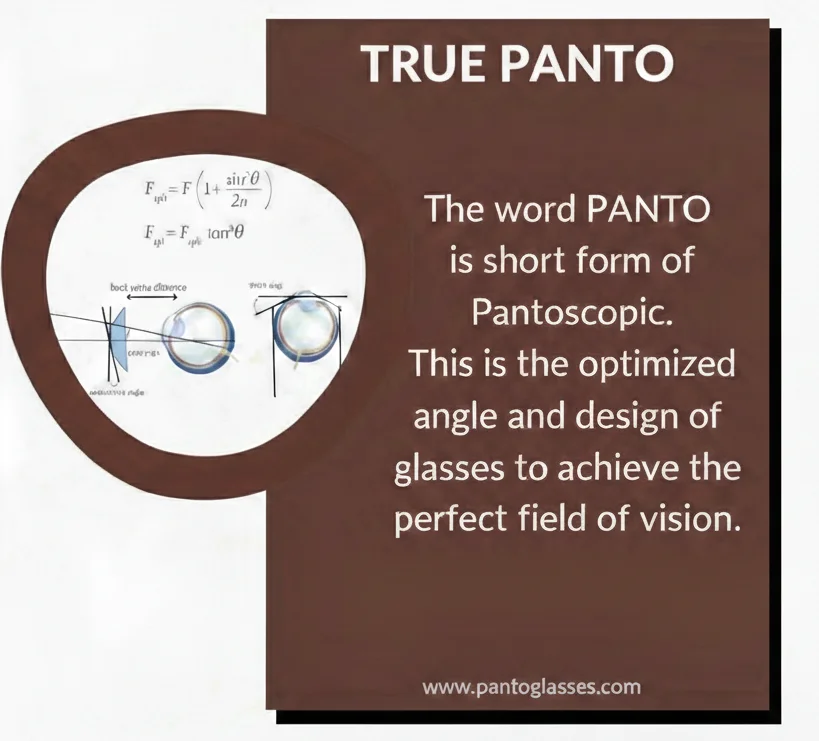
The name comes from pantoscopic, meaning “broad view.”
And that is exactly what the design was created to deliver.
PANTO IN PRACTICE
Timeless by design, Worn by all
The panto is one of the most appreciated and versatile eyewear designs in the world. Over the years, it has been worn by numerous well-known figures.
Loved by students, business professionals, artists, models, and lawyers alike, the panto appeals to anyone who appreciates classic design—lightweight, discreet, and never oversized.
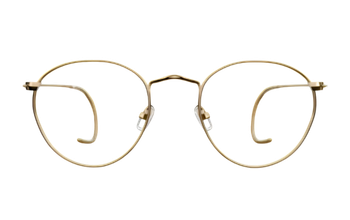
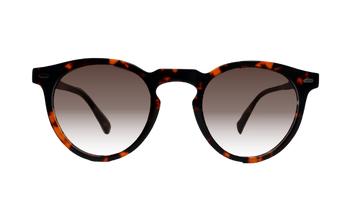
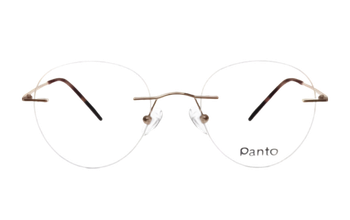












The Great "Panto" Misconception
Panto glasses are often grouped together with “round glasses.” But a true Panto is not defined by appearance alone — it is defined by geometry. A circular lens is simple. A Panto lens is constructed.
" A true Panto is not drawn freely — it is constructed."
It follows a specific optical blueprint developed in the 1930s — designed to balance vision, proportions, and facial anatomy. Without this structure, a frame may look similar, but it is not a true Panto.
What Does Panto Actually Mean?
To understand Panto, you need to understand pantoscopic design — the principle of optimizing how the lens sits in relation to the eye.
A true Panto frame is defined by four key elements:
The Anatomical Shape
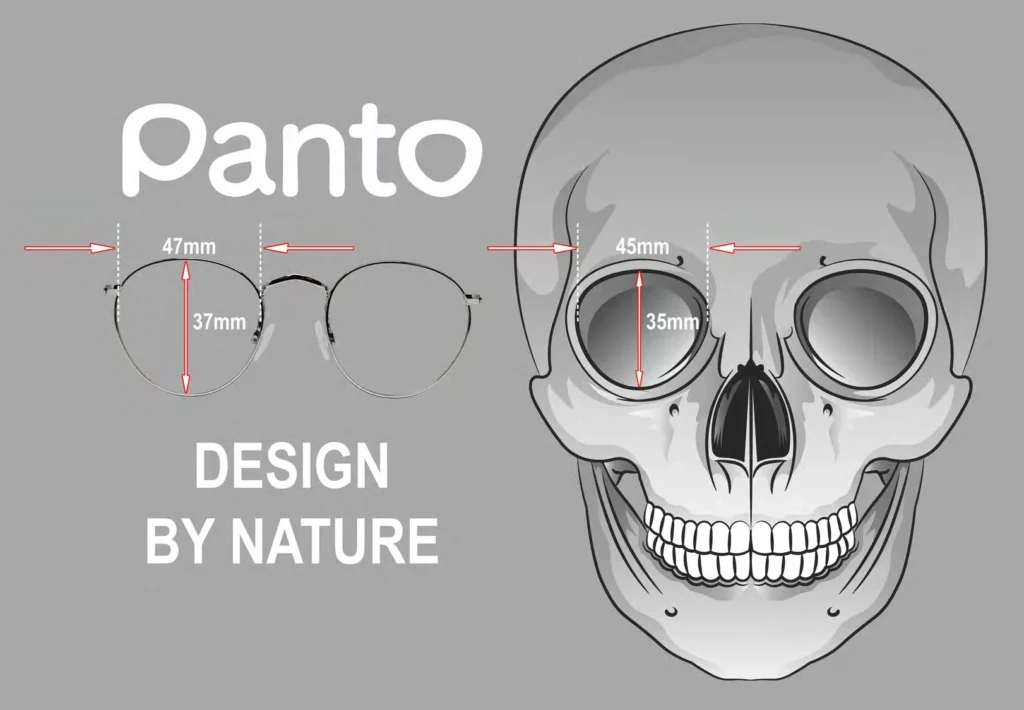
A carefully constructed lens shape designed to follow the natural curvature of the human eye orbit — providing a more natural visual experience.
The High Hinges
The temples are attached high on the frame, keeping your side vision clear and unobstructed.
The Optical Blueprint
Authentic Panto lenses follow a precise geometric construction developed nearly 100 years ago.
The Field of Vision
Unlike basic round lenses, Panto geometry is optimized to provide a wider and more efficient field of view across the entire lens.
Anatomical Design
The Science of the Eye Orbit
Panto frames were not originally designed as fashion. They were designed as functionally optimized visual eyewear, adapted to the natural structure of the human eye orbit.
This is why they feel balanced, natural, and visually efficient on almost every face.
The proportions are not random — they are the result of optical function refined over decades.
The Eye Orbit
45 × 35
millimeters (width × height)
The panto lens
47 × 37
millimeters (width × height)
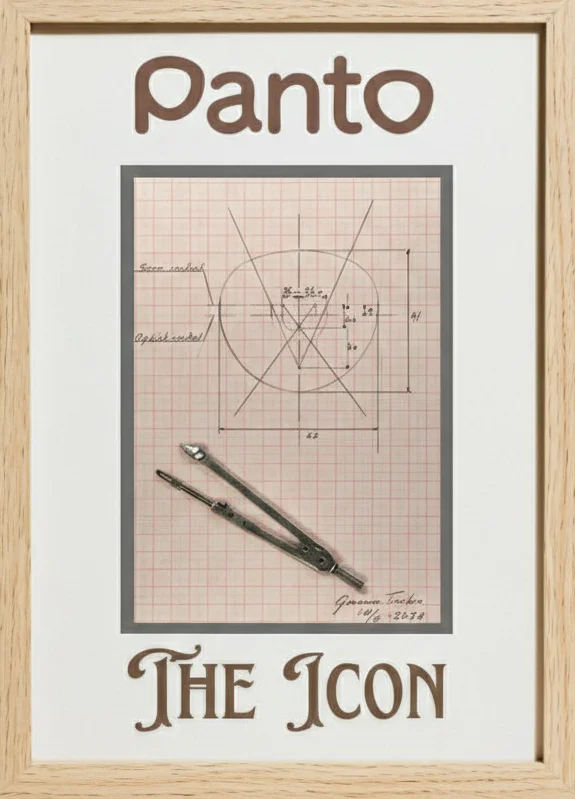
The 6-Radius Blueprint
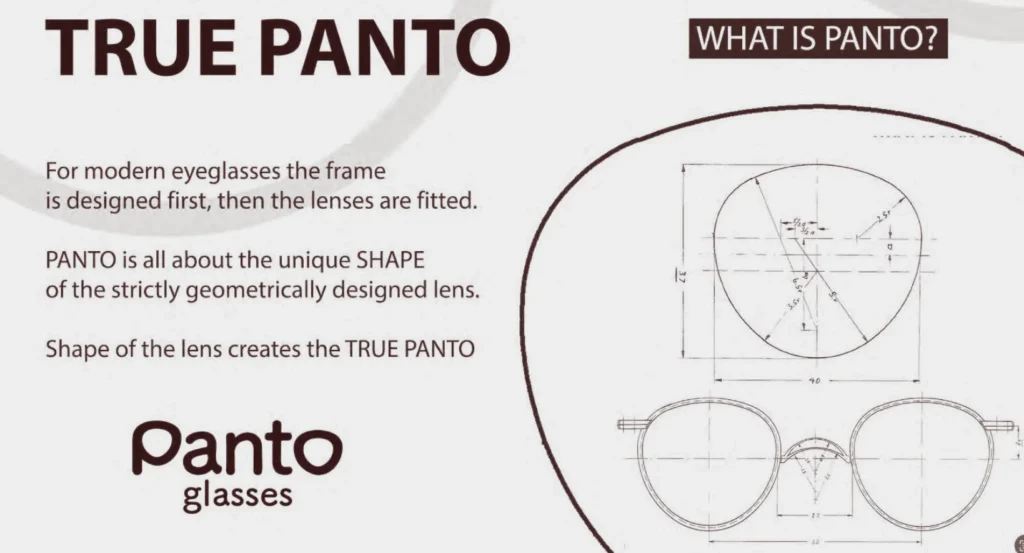
Most modern frames are designed first — and lenses are fitted afterward.
A true Panto follows the opposite principle:
the lens shape comes first.
The design is based on a precise geometric construction that ensures:
High Hinges
High hinge placement for unobstructed side vision
Geometric Continuity
Geometric continuity true to the original designs
Vertex Distance
Optimized vertex distance for improved visual performance/span>
This is what separates a true Panto from a simple rounded frame.
The Living Tradition
The original Panto construction has largely been lost over time.
Today, very few — if any — practitioners still master the full geometric method as it was originally taught.
In 2024, this knowledge was documented and preserved through the work of Gunnar Tveten, a Norwegian optician and educator.
Using only compass and ruler, he reconstructed the original pantoscopic geometry — capturing a technique that would otherwise have disappeared.
This is not just design history — it is preserved optical knowledge.

100 Years of Global History
1930's
The Launch
The first eyewear design to move beyond simple circular lenses — introduced in the UK, Germany, and the USA
1948–1985
The NHS Icon
The Panto 422HJ became a defining model, widely distributed through the UK National Health Service.
1980's
Student Glasses
The Panto “Oxford” style became dominant among students and young people across Europe.
2020's
Global Trend
The rounded but not circular Panto shape has become one of the most widely used eyewear designs worldwide
The "Levi's 501" of Eyeglasses
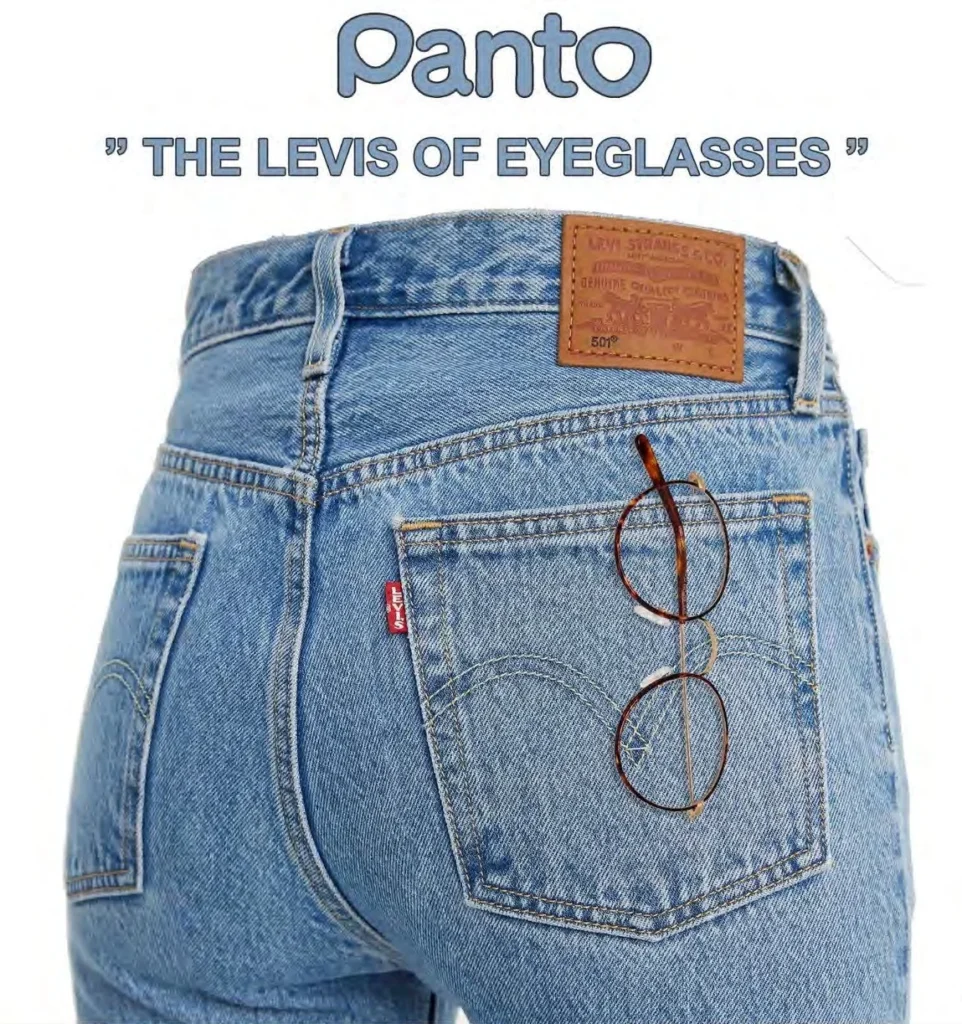
Just like Levi’s 501 jeans, Panto glasses represent a category-defining classic.
Not because they are trendy — but because they work.
Timeless design is not created by decoration.
It is created by function, proportion, and consistency over time.
Versatility
A shape that suits almost everyone.
Identity
Used by artists, thinkers, and creators for decades.
Longevity
Refined and worn across generations.
.
Identity
A Beloved Style with Many Names
Because of its global success, Panto has appeared under many different names:
- Windsor
- Beaufort
- Perivist
- Ful-Vue
- PEX
- P3
- Student Glasses
- Classic
- Vintage
But no matter the name, the core remains the same:
A versatile design built for wide vision, natural anatomical fit, and suitability for most faces.

FAQ's
Everything you need to know about Panto
What is Panto?
Panto is a specific eyeglass design defined by its rounded — but intentionally non-circular — shape, high hinge placement, and optical geometry.
What is the difference between Panto and round glasses?
Round glasses are typically circular or close-to-circular shapes. Panto glasses are constructed using a precise geometry designed to improve field of vision and anatomical fit.
Why do Panto glasses have high hinges?
High hinge placement keeps the temples out of your side view, improving peripheral vision.
Are Panto glasses suitable for all face shapes?
Yes. The balanced geometry makes Panto one of the most versatile eyewear designs ever created.
What does "Pantoscopic" mean in eyewear?
Pantoscopic comes from Greek: “panto” meaning all and “skopein” meaning to see. In eyewear, it refers to a design that provides a broad and optimized field of vision.
